Clear Orbit, Secure Future: A Call to Action on Space Debris
Space debris is no longer a distant risk—it is an economic reality. Contributing to the World Economic Forum’s latest report, Novaspace quantifies how orbital congestion could cost the global space economy up to $42.3 billion by 2035, underscoring the urgent need for coordinated action across industry, policy and technology.
National Space Programs 2025: Investments, Priorities, and Emerging Trends
Global government space spending reaches a record $137 billion in 2025, marking a strategic shift toward defense, resilience, and hybrid space models. This article explores key investment trends, national strategies, and the evolving global space landscape ahead of a projected surge from 2026.
The End of Gateway? Exploring the Consequences of NASA’s Lunar Shift
NASA’s decision to cancel the Lunar Gateway marks a major shift in the Artemis Program, prioritizing a surface-first strategy over orbital infrastructure. This analysis examines the drivers behind the decision and its implications for international partnerships, commercial actors, and the evolving geopolitical competition on the Moon.
Novaspace et la Région Occitanie confirment les nouvelles dates du Space Summit for a Resilient Future 2026
Novaspace et la Région Occitanie annoncent les nouvelles dates du Space Summit for a Resilient Future 2026 à Toulouse. Cet événement international réunira plus de 500 décideurs pour explorer le rôle du spatial dans la résilience, la durabilité et l’innovation.
Novaspace and the Occitanie Region Confirm New Dates for the Space Summit for a Resilient Future 2026
Novaspace and the Occitanie Region announce new dates for the Space Summit for a Resilient Future 2026, taking place in Toulouse on October 27–28 with global space leaders.
HTS Market Set to Reach $76B as Industry Enters Terabit Era
Novaspace’s latest High Throughput Satellites (HTS) report shows global demand reaching 218 Tbps by 2034, while service revenues are set to more than double to $76 billion over the same period.
The findings reflect a market entering a new phase of scale, driven by the rapid expansion of NGSO constellations – led by Starlink – and a steep change in performance, pricing, and global adoption.
Key Highlights from the 14th Edition of Perspectives Spatiales

The European space sector is entering a new phase focused on execution, sovereignty, and defense. Insights from Perspectives Spatiales 2026 highlight how strategic priorities, industrial consolidation, and operational demands are reshaping Europe’s space ecosystem.
The Post-Capacity Era of Satellite Connectivity
Novaspace’s Capacity Pricing Trends, 8th Edition finds the satellite connectivity market has entered a Post‑Capacity Era, where bandwidth is no longer the basis of differentiation. Starlink’s vertical integration and cost compression are accelerating this shift, resetting competitive expectations across the sector.
2026 Outlook: What to Expect in the Space Industry
Introduction After a decade of expansion fueled by commercial optimism and technological momentum, the space industry enters 2026 under a different set of rules. The industry is moving from a phase where success was defined by how fast systems could be put in orbit, to one where it is defined by how reliably, sustainably, and strategically those […]
10 Key Takeaways from the Middle East Space Conference 2026
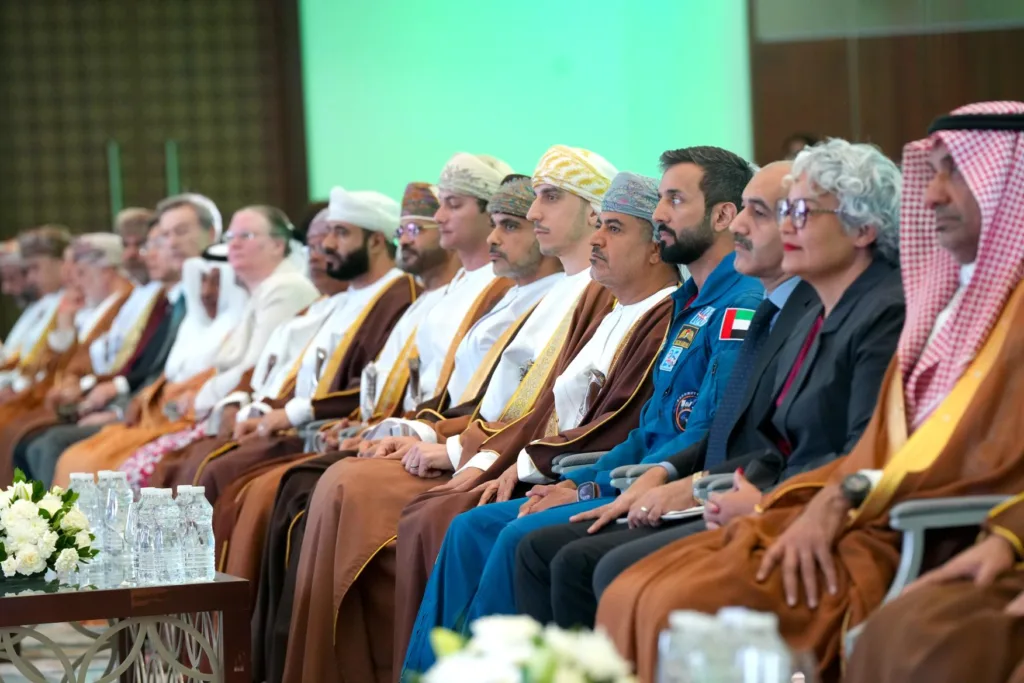
The Middle East Space Conference 2026 revealed a region moving from ambition to execution. This article outlines ten strategic signals shaping space investment, partnerships, regulation, defense, and commercialization across the Middle East.