Space Defense at an Inflection Point: From Investment to Operational Capability
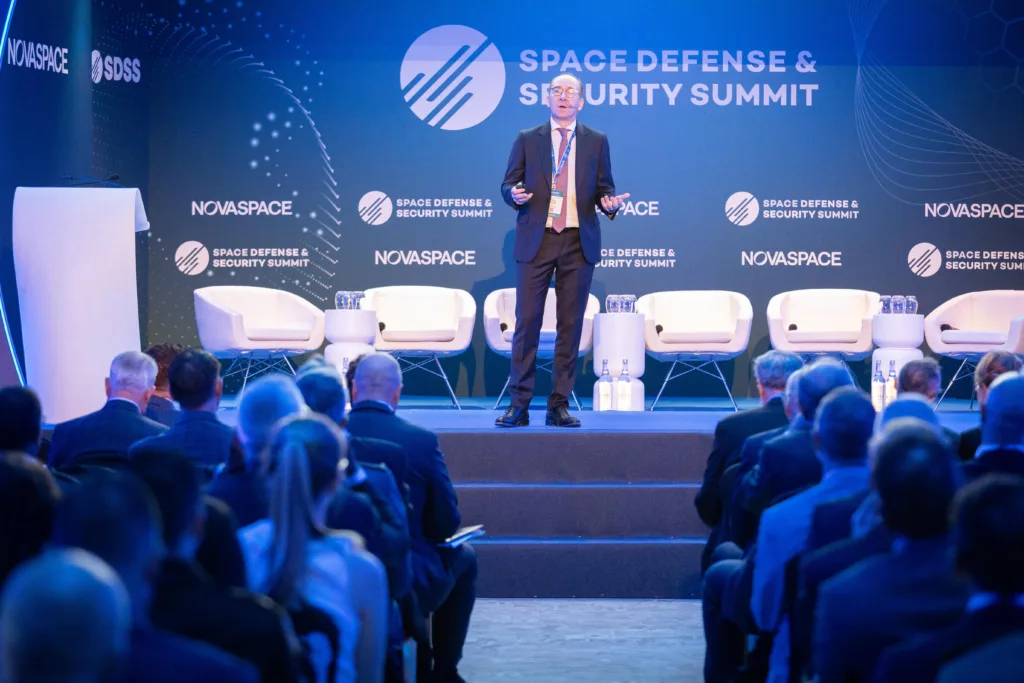
At SDSS 2026, Novaspace CEO Pacôme Révillon explored the forces reshaping space defense, from accelerating government investment and sovereign constellations to resilient architectures, interoperability and the growing challenge of turning investment into operational capabilities.
Sovereignty, Cooperation and Resilience in an Increasingly Contested Space Domain | Insights from SDSS 2026
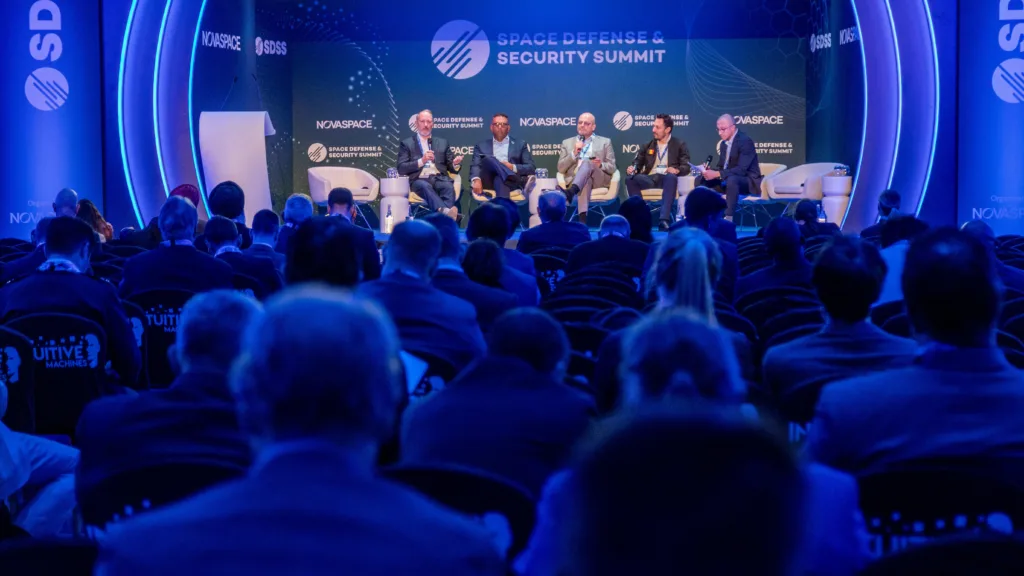
SDSS 2026 highlighted how sovereignty, resilience and cooperation are reshaping space defense and security. From multi-domain operations and GEOINT to secure connectivity, procurement and space domain awareness, discover the key trends discussed by military, government and industry leaders in Paris.
Space Summit for a Resilient Future 2026: Space at the Heart of Today’s Resilience Challenges
The Space Summit for a Resilient Future brings together leaders from space, government and critical industries to turn space capabilities into practical solutions for a more resilient future.
Global SSA Market to Reach $61B as Governments Prioritize Space Security, Resilience, and Orbital Safety
The 2nd edition of Novaspace’s Space Situational Awareness (SSA) report points to a pivotal decade ahead, with cumulative global spending projected to reach $61 billion over the next ten years. Amid rising orbital congestion, contested space activity, and growing geopolitical tensions, SSA is becoming foundational to space security, operational resilience, and long-term orbital safety.
From Experimentation to Operations: Key Insights from Novaspace at Space Symposium 2026
At Space Symposium 2026, Novaspace brought together global leaders to explore how artificial intelligence is reshaping space systems. Discussions revealed a clear transition from experimentation to operational deployment, with AI driving advances in space computing, interoperability, and defense applications. As trust, power constraints, and real-time decision-making take center stage, the industry is entering a new phase of AI-enabled space operations.
Clear Orbit, Secure Future: A Call to Action on Space Debris
Space debris is no longer a distant risk—it is an economic reality. Contributing to the World Economic Forum’s latest report, Novaspace quantifies how orbital congestion could cost the global space economy up to $42.3 billion by 2035, underscoring the urgent need for coordinated action across industry, policy and technology.
2026 Outlook: What to Expect in the Space Industry
Introduction After a decade of expansion fueled by commercial optimism and technological momentum, the space industry enters 2026 under a different set of rules. The industry is moving from a phase where success was defined by how fast systems could be put in orbit, to one where it is defined by how reliably, sustainably, and strategically those […]
The Missing Link to Space Superiority: In-Orbit Refueling
Space superiority is no longer defined by launch capacity, but by maneuverability and endurance in orbit. In-orbit refueling removes the fuel constraint that limits today’s space systems. Discover why it is becoming critical infrastructure for defense and commercial space.
Global Space Spending Reaches $137B, Marking a Defense‑Led Era
Global government space spending reached $137.4B in 2025, driven by defense priorities, secure satcom, and evolving commercial procurement models, marking a structural shift in national space strategies.
Geopolitical Shifts and AI Reshapes Earth Observation Market
Geopolitical tensions and AI integration are transforming the Earth Observation market, driving demand for sovereign, defense-grade intelligence and accelerating the shift toward data fusion and integrated EO services.