The Post-Capacity Era of Satellite Connectivity
Novaspace’s Capacity Pricing Trends, 8th Edition finds the satellite connectivity market has entered a Post‑Capacity Era, where bandwidth is no longer the basis of differentiation. Starlink’s vertical integration and cost compression are accelerating this shift, resetting competitive expectations across the sector.
2026 Outlook: What to Expect in the Space Industry
Introduction After a decade of expansion fueled by commercial optimism and technological momentum, the space industry enters 2026 under a different set of rules. The industry is moving from a phase where success was defined by how fast systems could be put in orbit, to one where it is defined by how reliably, sustainably, and strategically those […]
10 Key Takeaways from the Middle East Space Conference 2026
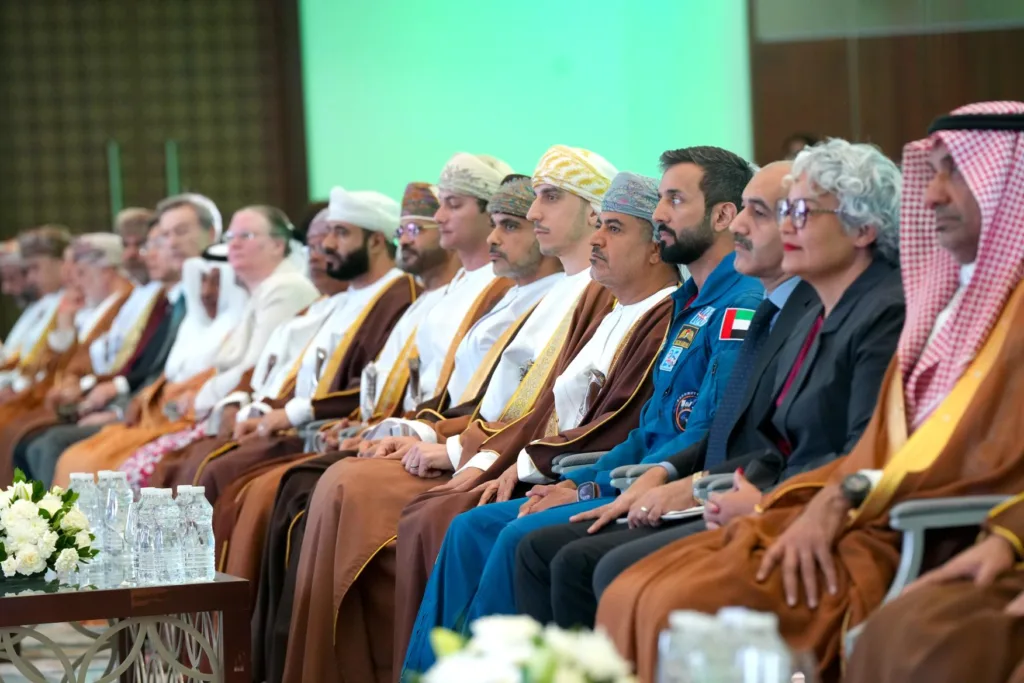
The Middle East Space Conference 2026 revealed a region moving from ambition to execution. This article outlines ten strategic signals shaping space investment, partnerships, regulation, defense, and commercialization across the Middle East.
Global Space Economy Reaches $626 Billion, Marking a New Phase of Growth
The 12th edition of Novaspace’s Space Economy Report notes the global space economy is now on a significant growth trajectory, positioned to expand from $626.4 billion in 2025 to $1.01 trillion by 2034, a significant 5.5% CAGR. While growth continues to be supported by innovation, new business models, assertive government policies and expanding demand for satellite-enabled services, 2025 stands out as a structural inflection point, marking a transition from rapid expansion toward a more mature and structured space market.
Global Space Spending Reaches $137B, Marking a Defense‑Led Era
Global government space spending reached $137.4B in 2025, driven by defense priorities, secure satcom, and evolving commercial procurement models, marking a structural shift in national space strategies.
2025 in Review: A Year of Acceleration and Transformation in the Global Space Economy
2025 marked a decisive shift for the global space sector. As governments strengthened sovereignty and defense postures, and private investment returned with greater discipline, the space economy entered a new phase defined by execution, resilience, and consolidation. Rather than speculative expansion, growth is now driven by operational maturity, integrated capabilities, and long-term value creation across the space value chain.
Inside the Novaspace Space Track: When Space Becomes Infrastructure
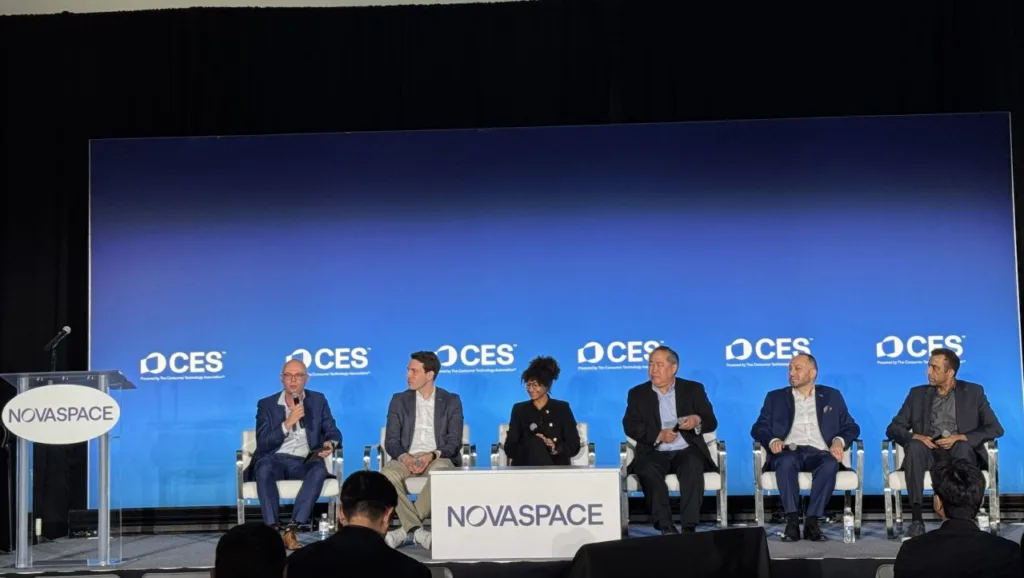
At CES 2026, Novaspace led a dedicated space technology track examining how space capabilities are moving from orbit into real-world applications. Across mobility, connectivity, aviation, and Earth intelligence, one message stood out clearly: space is no longer a standalone sector, but a foundational layer shaping how industries operate, compete, and deliver value.
Middle East Space Conference 2026 Returns to Muscat as a Strategic Platform for Regional Growth
The Middle East Space Conference 2026 returns to Muscat from January 26 to 28, convening 450+ senior decision-makers to shape the next phase of growth of the Middle East space ecosystem.
Direct-to-Device Connectivity: A $100 Billion Market Transformation
Satellite-enabled smartphones and IoT drive the next decade of global connectivity growth Paris, France [December, 2025] – Novaspace’s 10th edition of Prospects for Direct to Handheld and IoT Markets reveals a decade of unprecedented connectivity growth. Over $100 billion in cumulative revenues are projected across all D2D and IoT segments by 2034, driven by mass-market adoption of satellite-enabled smartphones and next-generation […]
2025: The Turning Point for Satellite Operators
Multi-orbit deployments and vertical integration redefine competitiveness in 2025. Paris, France [December, 2025] – Released today, Novaspace’s latest FSS Operators: Benchmarks & Performance Review unveils a year of transformation for satellite operators. 2025 is redefining the rules of the game for Fixed Satellite Service (FSS) operators. Faced with rising cost pressures and NGSO-driven disruption, operators […]