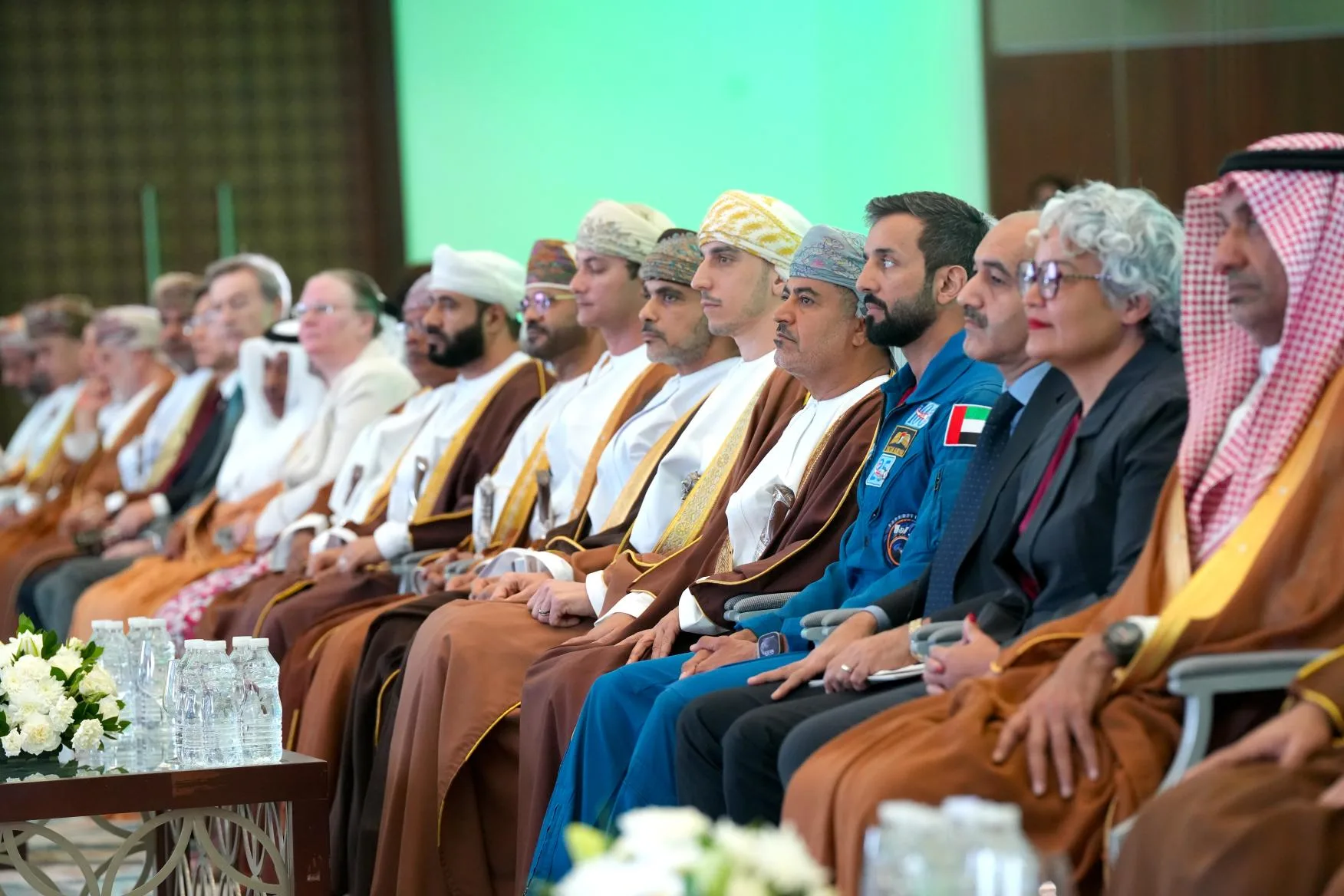
From January 26 to 28, 2026, Muscat became a regional hub for the space sector as it hosted the Middle East Space Conference (MESC), organized under the patronage of His Highness Sayyid Dr. Kamil bin Fahd Al Said by Oman’s Ministry of Transport, Communications and Information Technology, in partnership with Novaspace. The Omani capital welcomed leaders from government, industry, and academia for three days of discussions on the future of space in the region and beyond.
Bringing together more than 600 senior executives, policymakers, investors, and innovators from over 30 countries across the Middle East and the global space community, MESC served as a key platform for dialogue, partnerships, and deal-making. Through panels, keynotes, and closed-door meetings, the conference offered a clear view of the priorities shaping the region’s space ambitions and capabilities.
The space sector in the Middle East is moving fast. Investment is rising, new programs are taking shape, and cross-border cooperation is deepening. In Muscat, these developments and many others were on full display.
Below are the ten strategic signals from MESC 2026:
- International Partnerships & Collaboration at the Forefront of Development
MESC hosted the signing of several ground-breaking agreements. For instance, MESC saw Oman become the 61st signatory to the Artemis Accords, hosted important commercial partnerships such as the service provisioning agreement between Omantel and OQGN with ETCO SPACE for pipeline monitoring and surveillance, Astranis Space Technologies confirming a partnership with MB Group to develop Oman’s first dedicated communications satellite, a Memorandum of Understanding between ETCO and Oman Lens, and academic collaboration between local industry and universities.
These announcements follow more than 15 space systems acquisitions and launches in 2025, including the procurement of OmanSat-1 and several other remote sensing and technology demonstrator missions.
- Collaboration & Competition: A Delicate Balance and a Symbiotic Relationship
Through discussions on the role of institutional partnerships in strategic positioning, several speakers highlighted that diversified partnerships are not only tools for collaboration and space diplomacy, but also mechanisms to enhance resilience and autonomy. They help ensure assured access to critical capabilities, often prioritized over the development of fully sovereign solutions.
- Regional Space Strategies Move from Ambitions to Actions
Across panels, discussions reflected a clear evolution in how space capability is being developed in the region, propelled by a tripling of government investment in space in GCC countries in the last 5 years. Speakers highlighted that national strategies are now being supported by detailed procurement mechanisms, commercial and institutional partnerships, and deployment timelines shifting the focus from policy design to operational delivery.
- Developing the Innovation Potential of the Middle East Space Sector
Speakers emphasized that cooperation and capital must evolve together, with incubators, accelerators, and industry-backed platforms emerging as critical enablers for translating innovation into viable space enterprises.
- Oman Positioning Itself as a Gateway for Private Space Investment
Discussions highlighted how Oman, alongside the wider GCC region, is increasingly positioning itself to attract private investment as the next phase in developing national space capabilities, including by supporting local development of capabilities through business incubation & acceleration programmes.
- Defence & Dual-Use: Balancing Immediate Demand with Long-term Growth
Speakers highlighted that defense customers were driving much of today’s market traction for space companies. At the same time, panelists emphasized that sustainable growth relies on dual-use platforms capable of serving civil, sustainability, and government markets, preparing companies for a future in which defense budgets alone may not sustain expansion.
- Regulations to act as Enabler to Innovation
A consistent theme was the importance of regulation that supports investment without creating unnecessary friction. Strong intellectual property protection, clear space law, and minimal bureaucracy were identified as critical enablers for attracting capital and fostering innovation in the region.
- Middle East Space Market: pragmatic pathways to investable scale
The region’s space ecosystem was characterized as pragmatic and opportunity-driven. Downstream applications, particularly in Earth observation and satellite communications, were seen as near-term opportunities for returns and capability building. Upstream ambitions, such as spaceports, were discussed in relation to clear regulatory frameworks and credible demand signals.
- Commercialization & Market Readiness: Turning Ambition into Revenue
Panels highlighted that having cutting-edge technology is only part of the equation—bringing it to market efficiently is equally critical. Speakers noted the importance of clear business models, end-user engagement, and scalable operational plans to ensure that regional space programmes and startups can move from prototypes to commercially viable solutions, driving tangible economic impact.
- Focus Placed on Talent Attraction Towards the Space Sector
The conference concluded with a strong focus on people, emphasizing the importance of engaging students, strengthening STEM pathways, and preparing the next generation to carry the region’s space ambitions forward.
The Middle East Space Conference 2026 in Muscat showcased a region in motion, where ambition meets action, partnerships drive progress, and innovation is matched with pragmatism. As space programs move from strategy to execution, the conference highlighted not only what is possible today, but also the pathways that will define the Middle East’s space ecosystem in the years ahead.
The discussions initiated at MESC 2026 will continue through Novaspace’s Executive Summits, where senior leaders engage in execution, partnerships, and market realities shaping the space sector. We look forward to continuing the dialogue.