National Space Programs 2025: Investments, Priorities, and Emerging Trends
Global government space spending reaches a record $137 billion in 2025, marking a strategic shift toward defense, resilience, and hybrid space models. This article explores key investment trends, national strategies, and the evolving global space landscape ahead of a projected surge from 2026.
GSOA and Novaspace Launch the Space Industry Forum (SIF) 2026 in Singapore

GSOA and Novaspace announce the launch of the Space Industry Forum (SIF) 2026 in Singapore, a high-level gathering of global space and satellite leaders shaping the future of the industry ahead of Asia Tech x Singapore.
Novaspace et la Région Occitanie confirment les nouvelles dates du Space Summit for a Resilient Future 2026
Novaspace et la Région Occitanie annoncent les nouvelles dates du Space Summit for a Resilient Future 2026 à Toulouse. Cet événement international réunira plus de 500 décideurs pour explorer le rôle du spatial dans la résilience, la durabilité et l’innovation.
Novaspace and the Occitanie Region Confirm New Dates for the Space Summit for a Resilient Future 2026
Novaspace and the Occitanie Region announce new dates for the Space Summit for a Resilient Future 2026, taking place in Toulouse on October 27–28 with global space leaders.
Key Highlights from the 14th Edition of Perspectives Spatiales

The European space sector is entering a new phase focused on execution, sovereignty, and defense. Insights from Perspectives Spatiales 2026 highlight how strategic priorities, industrial consolidation, and operational demands are reshaping Europe’s space ecosystem.
10 Key Takeaways from the Middle East Space Conference 2026
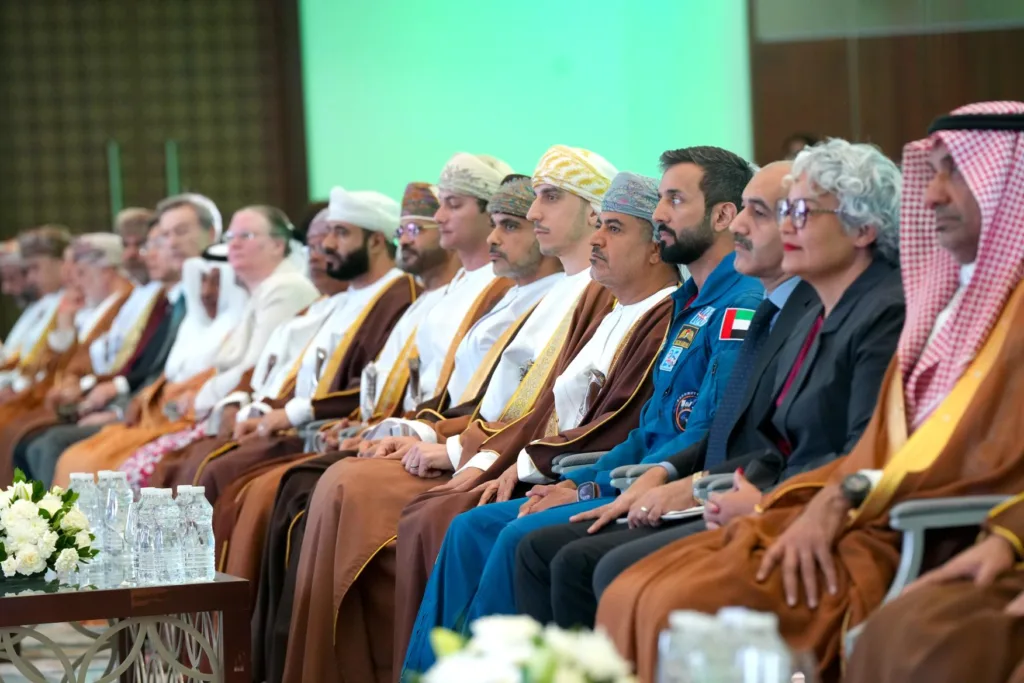
The Middle East Space Conference 2026 revealed a region moving from ambition to execution. This article outlines ten strategic signals shaping space investment, partnerships, regulation, defense, and commercialization across the Middle East.
Global Space Economy Reaches $626 Billion, Marking a New Phase of Growth
The 12th edition of Novaspace’s Space Economy Report notes the global space economy is now on a significant growth trajectory, positioned to expand from $626.4 billion in 2025 to $1.01 trillion by 2034, a significant 5.5% CAGR. While growth continues to be supported by innovation, new business models, assertive government policies and expanding demand for satellite-enabled services, 2025 stands out as a structural inflection point, marking a transition from rapid expansion toward a more mature and structured space market.
Global Space Spending Reaches $137B, Marking a Defense‑Led Era
Global government space spending reached $137.4B in 2025, driven by defense priorities, secure satcom, and evolving commercial procurement models, marking a structural shift in national space strategies.
2025 in Review: A Year of Acceleration and Transformation in the Global Space Economy
2025 marked a decisive shift for the global space sector. As governments strengthened sovereignty and defense postures, and private investment returned with greater discipline, the space economy entered a new phase defined by execution, resilience, and consolidation. Rather than speculative expansion, growth is now driven by operational maturity, integrated capabilities, and long-term value creation across the space value chain.
Inside the Novaspace Space Track: When Space Becomes Infrastructure
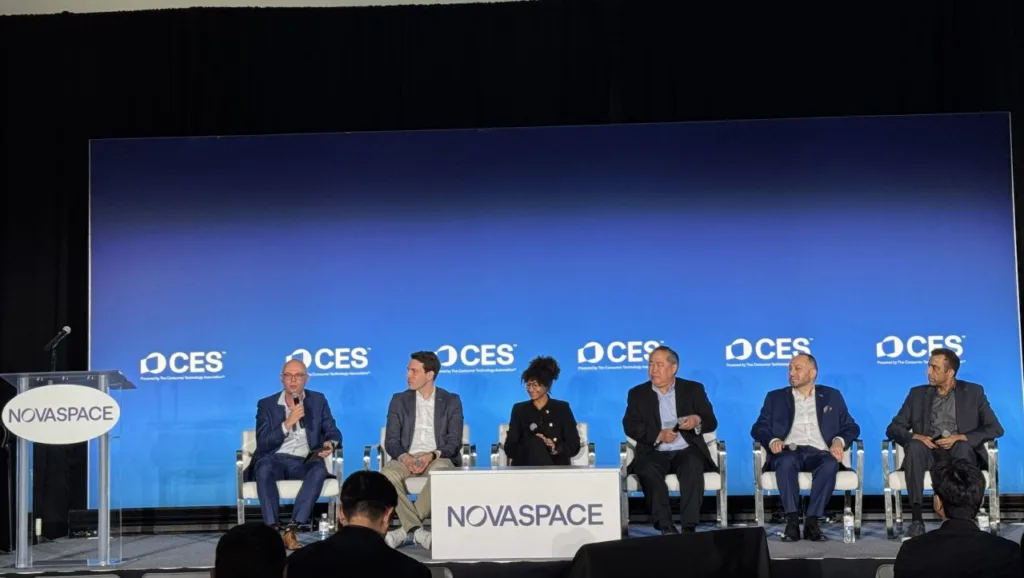
At CES 2026, Novaspace led a dedicated space technology track examining how space capabilities are moving from orbit into real-world applications. Across mobility, connectivity, aviation, and Earth intelligence, one message stood out clearly: space is no longer a standalone sector, but a foundational layer shaping how industries operate, compete, and deliver value.